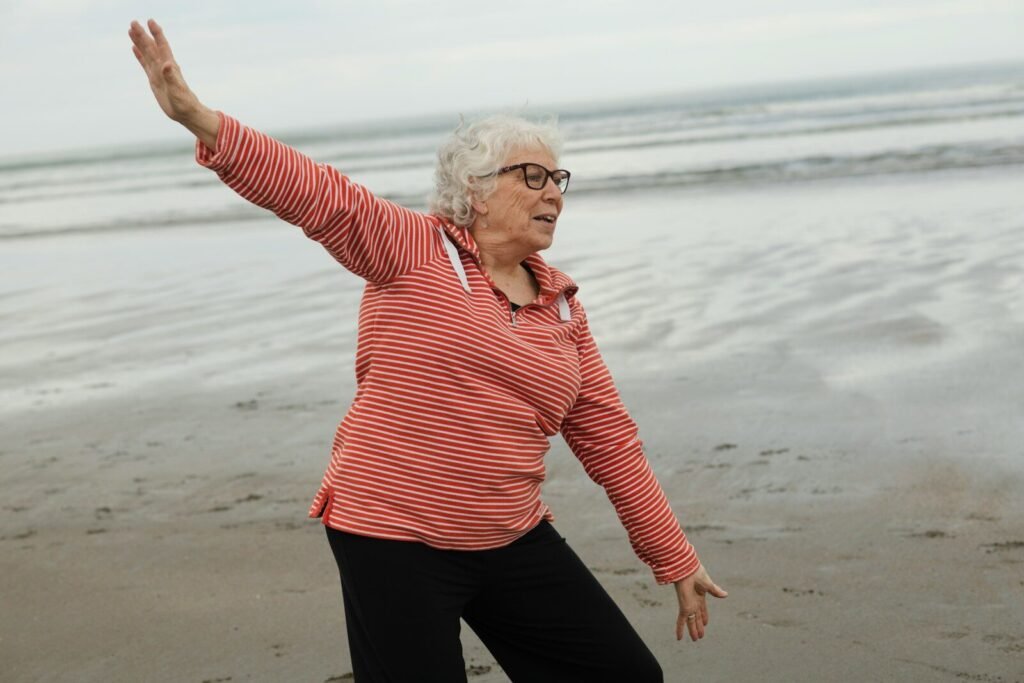
Quick answer: Practicing balance exercises a few times a week can reduce your risk of falling. Start with simple moves while holding a sturdy chair or kitchen counter, such as standing on one leg, heel-to-toe standing and side leg raises. Combine them with strength exercises and a safer home for the best protection.
Falls are one of the biggest threats to independence after 60. Many people do not realize that balance is a skill, and like any skill, it gets better with practice at any age. A few minutes a day can help you feel steadier and more confident on your feet.
Safety first
- Always stand next to a sturdy chair, kitchen counter or wall that you can hold.
- Have someone nearby the first few times if you feel unsteady.
- Wear supportive shoes, not socks or loose slippers.
- Stop if you feel dizzy.
1. Weight shifts
Stand with feet hip-width apart, holding the chair. Slowly shift your weight to your right foot, then to your left. Repeat 10 times.
2. Single-leg stand
Hold the chair and lift one foot slightly off the floor. Hold for up to 10 seconds, then switch. Do 5 on each side. As you improve, hold with one hand, then just fingertips.
3. Heel-to-toe stand
Place one foot directly in front of the other, heel touching toes, like standing on a tightrope. Hold for 10 to 20 seconds. Switch feet.
4. Heel-to-toe walk
Holding a counter, walk 10 steps placing your heel just in front of your toes each time. Look ahead, not down.
5. Side leg raises
Hold the chair, stand tall and lift one leg out to the side, keeping your toes pointing forward. Lower slowly. Do 10 on each side. This strengthens the hip muscles that keep you steady.
6. Back leg raises
Holding the chair, lift one leg straight back without bending your knee or leaning forward. Do 10 on each side.
7. Sit-to-stand
Standing up from a chair without using your hands builds leg strength, one of the most important protections against falls. See our chair exercises guide for how to do it.
8. Clock reach
Hold the chair with your left hand. Imagine you are standing in the middle of a clock. Point your right arm to 12, then 3, then 6. Switch sides.
How often?
Practice for 10 to 15 minutes, 3 or more days a week. Many people like to do a few balance moves while waiting for your coffee to brew.
Make your home safer
- Remove loose rugs and clutter from walkways.
- Add bright lighting and night lights, especially between the bedroom and bathroom.
- Install grab bars in the bathroom and use a non-slip bath mat.
- Use handrails on both sides of the stairs if possible.
- Keep things you use often within easy reach.
Other things that help
- Have your eyes checked every year.
- Review your medicines with your doctor or pharmacist; some can cause dizziness.
- Stay strong: see Muscle Loss After 60.
- Tell your doctor about any fall, even if you were not hurt.
Frequently asked questions
Can balance improve after 70?
Yes. Balance responds well to practice at any age. Many people notice they feel steadier within a few weeks.
What is the best exercise for balance?
There is no single best one. Combining single-leg stands, heel-to-toe walking and leg-strengthening exercises gives the most benefit. Tai chi is also excellent for balance.
Should I use a walking stick?
If you often feel unsteady, a walking aid can help. Ask a physical therapist to check the right height and type for you.
This article is for general information only and is not medical advice. Please talk to your doctor or physical therapist before starting new exercises or treatments, especially if you have a health condition.