As an Amazon Associate I earn from qualifying purchases. Our picks are based on research into product features, safety and independent expert reviews. Prices change often, so please check the current price on Amazon. Learn more.
Quick answer: Resistance bands are one of the best value tools for building strength after 60. For beginners, choose a set of flat or tube bands with several light resistance levels, comfortable handles, and a door anchor. Start with the lightest band, and always check bands for small tears before use.
If you want to get stronger at home but do not like the idea of heavy weights, resistance bands are a great choice. They are light, cheap, easy to store and gentle on the joints. They are also very adjustable: you can make an exercise easier or harder just by changing your grip or the band.
Why resistance bands suit older adults
- Joint-friendly: the resistance is smooth, with no sudden jerks.
- Safe: there is nothing heavy to drop on your feet.
- Versatile: you can exercise your legs, arms, back and shoulders, sitting or standing.
- Affordable: a good set usually costs less than a single pair of dumbbells.
- Effective: they help slow age-related muscle loss. See Muscle Loss After 60.
Types of resistance bands
Flat therapy bands
Long, flat strips of stretchy material, often used by physical therapists.
- Pros: gentle, great for rehab and light exercises, easy to wrap around your hands or feet.
- Cons: can roll up or snap if overstretched; no handles.
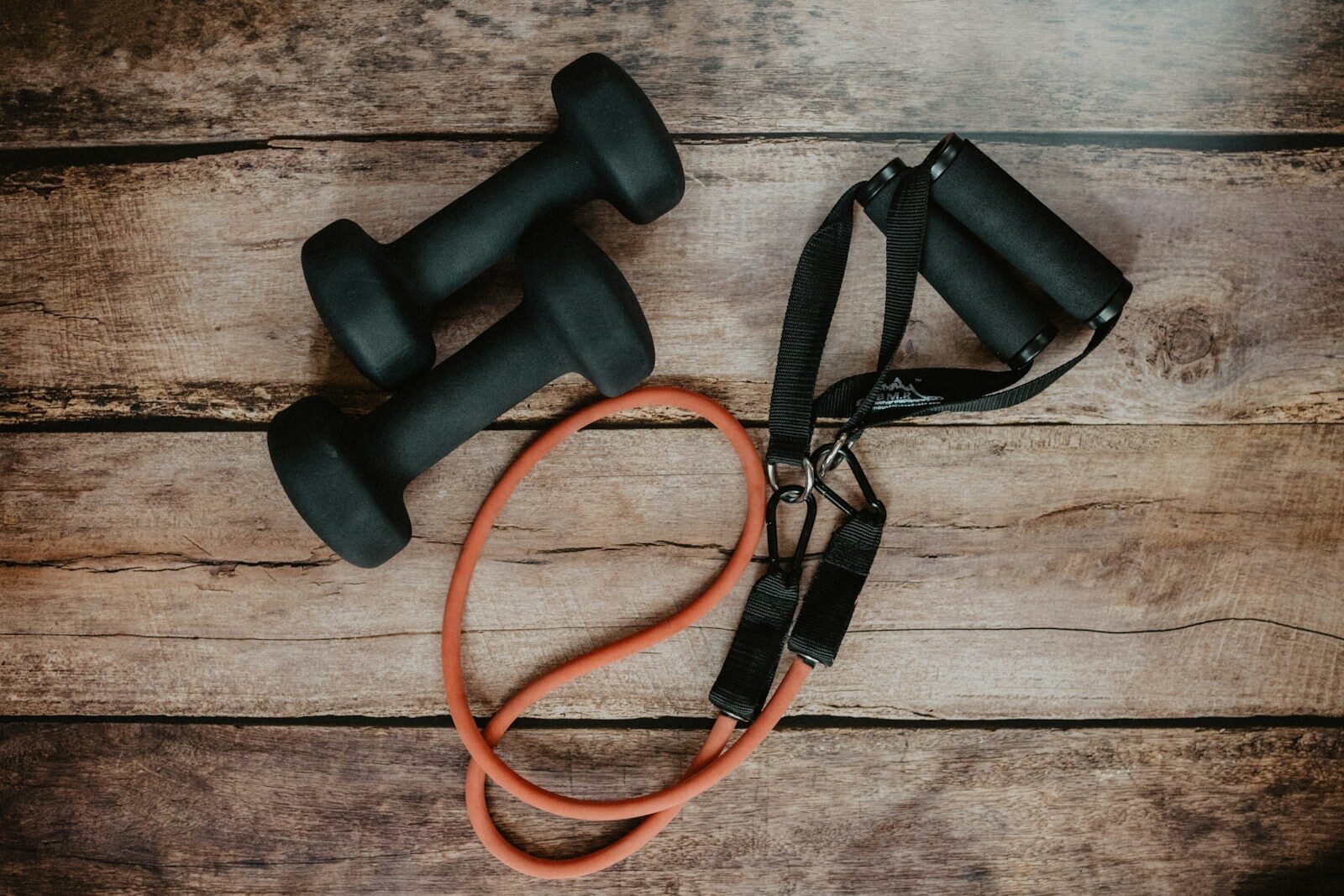
Tube bands with handles
Rubber tubes with foam or plastic handles at each end.
- Pros: comfortable grip, good for arthritic hands, often come with a door anchor.
- Cons: slightly bulkier.
Loop (mini) bands
Small circular bands worn around the legs.
- Pros: excellent for hip and leg strength.
- Cons: can be tricky to put on if bending is difficult.
Fabric bands
Thick fabric loops that do not roll or pinch.
- Pros: comfortable and durable.
- Cons: often stronger resistance than beginners need.
Our Top Resistance Band Picks
| Product | Best for | Link |
|---|---|---|
| THERABAND Beginner Set (Non-Latex) | Beginners and physical therapy exercises | See on Amazon |
| Healthy Seniors Chair Exercise Program | Seated workouts with handles and a guide | See on Amazon |
| Fit Simplify Resistance Loop Bands | Budget-friendly leg and hip exercises | See on Amazon |
Best for Beginners
THERABAND Resistance Bands Set (Beginner, Non-Latex)
THERABAND is the brand many physical therapists use. This beginner set includes three light, color-coded bands, so you can start easy and progress over time.
What we like
- Trusted clinical brand
- Non-latex, good for people with latex allergies
- Color-coded levels make progress easy to track
Keep in mind
- Flat bands have no handles
- Can be hard to grip if your hands are weak
Best for Chair Workouts
Healthy Seniors Chair Exercise Program
Designed specifically for older adults: two bands with soft-grip handles and a large-print exercise guide for seated, full-body workouts.
What we like
- Soft-grip handles are easier on arthritic hands
- Large-print guide plus online videos
- Made for seated exercise
Keep in mind
- Only two resistance levels
- Natural rubber, so not suitable for latex allergies
Best Budget Pick
Fit Simplify Resistance Loop Bands
An affordable set of small loop bands, great for leg and hip strengthening exercises like side leg raises and seated leg presses.
What we like
- Very affordable
- Several resistance levels in one set
- Small and easy to store
Keep in mind
- Can be hard to slip on if bending is difficult
- Not ideal for upper-body exercises
What to look for
- Several resistance levels: sets usually range from extra-light to heavy. Beginners should start with the lightest one or two.
- Comfortable handles: padded handles are easier on sore hands.
- Door anchor: lets you do rows and chest presses safely.
- Latex-free option: important if you have a latex allergy.
- Clear instructions or exercise guide: helpful when you are starting out.
Safety tips
- Check bands for nicks, cracks or sticky spots before every use; replace damaged bands.
- Keep bands away from sharp objects, heat and direct sunlight.
- Do not stretch a band more than about 2.5 times its resting length.
- Control the band on the way back. Do not let it snap.
- Keep your face away from the line of the stretched band.
Three easy starter exercises
- Seated row: sit tall, loop the band around your feet, hold the ends and pull your elbows back, squeezing your shoulder blades. 10 reps.
- Seated leg press: loop the band around one foot, hold the ends, and push your leg out straight. 10 reps each leg.
- Bicep curl: stand on the band with both feet, hold the ends and bend your elbows to bring your hands to your shoulders. 10 reps.
For more ideas, combine these with our 10 easy chair exercises.
Frequently asked questions
Which resistance band color should a beginner use?
Colors vary between brands, so check the resistance level, not the color. Start with the lightest band in the set.
How often should seniors use resistance bands?
Two or three days a week, with a rest day in between, is a good start.
Are resistance bands as good as weights?
For most older adults aiming to stay strong and independent, bands can be just as effective as weights when used regularly.
This article is for general information only and is not medical advice. Please talk to your doctor or physical therapist before starting new exercises or treatments, especially if you have a health condition.